Kitchen water damage repair in North Park: what to do first
Shut off the water, kill power to the wet zone, and get extraction started within the hour. Here is the exact order of operations for kitchen water damage in North Park.
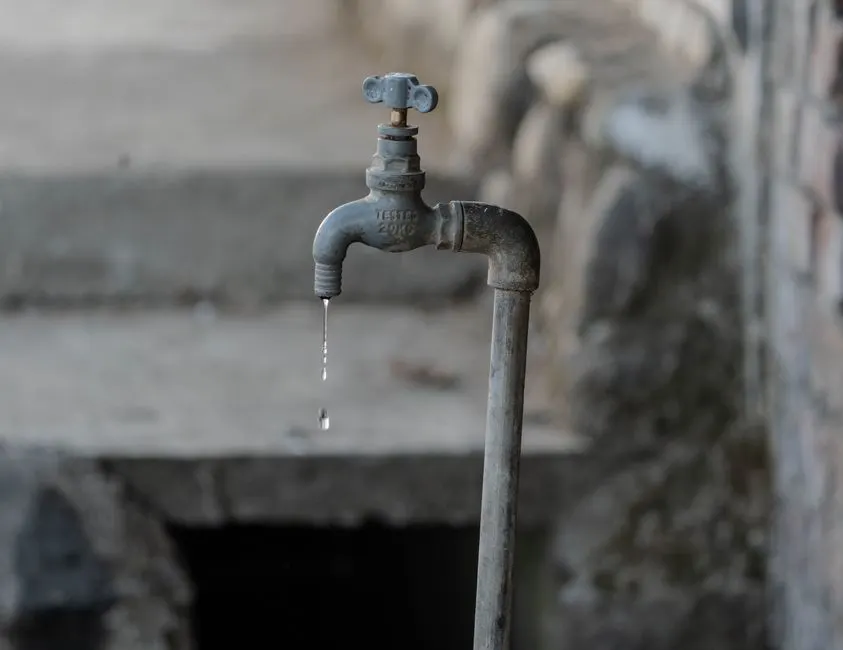
Shut off the water supply to the kitchen, kill power to every wet outlet and appliance circuit, and get standing water extracted within the first hour. That order matters more than anything else you do today, because water under a kitchen floor spreads sideways faster than it spreads down, and the first 60 minutes decide whether you are looking at a $900 repair or a $9,000 rebuild.
Kitchen water damage repair in North Park is a category of restoration work that stops an active kitchen leak, removes the water it left behind, and dries the cabinets, subfloor, and wall cavities before mold takes hold. We run these calls across American Fork every week, and the homes that come out cheapest are almost always the ones where somebody shut the valve off fast and called before lunch.
Here is the exact sequence, what it costs in 2026, and the mistakes we see homeowners make while they wait for us to arrive.
The first hour: shut off, kill power, start extraction
The first hour of a kitchen leak is about stopping the source and stopping the danger, in that order. Water and live electricity in the same room is the only genuinely life-threatening part of a kitchen flood, so treat the breaker panel as your second stop after the shutoff valve.
- Find the shutoff. Under the sink for the supply lines, behind the fridge for the ice maker line, or at the main valve where the line enters the house. Turn it clockwise until it stops.
- Kill the power. Flip the breakers for the kitchen outlets, dishwasher, disposal, and range. If the panel is in a wet area, do not go near it - call us and we will handle it.
- Pull the water. Towels and a wet/dry vac buy you time, but a shop vac holds maybe 6 gallons. A dishwasher leak can put 15 to 30 gallons on the floor before you notice it.
- Lift what you can. Move the rug, the dog bowl, the recycling bin, anything sitting in the puddle. Anything porous that has been wet more than 24 hours is usually a loss.
- Photograph everything before you clean up. Your insurance adjuster wants the mess, not the tidy version.
If the water is still coming, or you cannot find the valve, call us at the number at the bottom of this page and we will walk you to it while a crew is rolling. Our emergency water removal American Fork UT trucks carry extraction wands, thermal cameras, and dehumidifiers, and we can be pulling water out of your kitchen while you are still on the phone with your insurance company.
What should I do first for kitchen water damage in North Park?
Shut the water off first, then cut power, then start removing standing water - in that order, every time. Everything else, including calling your insurance agent and moving furniture, comes after those three.
The reason the order is fixed is that each step removes a different hazard. Shutting the water off stops the damage from growing. Cutting power removes the shock risk. Removing water limits how far it wicks into the subfloor and the toe kicks of your cabinets. Skip any one of them and the next step gets harder or more dangerous.
Once those three are done, the clock switches from minutes to hours. Mold needs roughly 24 to 48 hours of sustained moisture to colonize drywall paper and cabinet particleboard. That is your real deadline. If you can get a crew extracting and drying within that window, you usually avoid demolition. Past 72 hours, we are often cutting out cabinet bases and the bottom 12 inches of drywall.
If you are searching for water damage restoration near me American Fork UT at 11 p.m. because the ice maker line let go while you were asleep, that is exactly the call we take. We run overnight crews for this reason.
Where kitchen water actually comes from in North Park homes
Kitchen water in North Park comes from five sources, and four of them are slow leaks you did not notice until the cabinet floor swelled. The dramatic burst pipe gets the attention, but the slow drip under the sink does more total damage across American Fork every year.
- Supply line failures. Braided stainless lines under the sink and behind the fridge have a service life of about 5 to 8 years. When they fail, they fail at the crimp, usually at 2 a.m.
- Dishwasher discharge. A cracked drain hose or a failed door gasket dumps a quart or more per cycle onto the floor, right at the cabinet base.
- Disposal and trap leaks. The slip nuts on a P-trap loosen over time. A slow drip there rots the cabinet floor from underneath.
- Ice maker lines. The saddle valve behind the fridge is the single most common leak point we find in newer American Fork builds.
- Freeze events. When a hard freeze hits an exterior wall, the pipe feeding the kitchen sink is the first to split. We see this every January along the east bench.
Homes in North Park Water Damage Restoration tend to have a specific pattern: galley and L-shaped kitchens with the sink on an exterior wall, which puts the supply lines in the coldest part of the house. That layout is great for light and terrible for pipes in February.
If the leak came from a toilet or a supply line feeding one, that is a different scope of work - see our water leak restoration American Fork UT page for how we handle line failures that start outside the kitchen.
What you can safely do yourself, and what you cannot
You can move furniture, pull up a loose rug, and run a fan. You cannot dry a cabinet base, a subfloor, or a wall cavity with household equipment, and trying usually makes things worse.
Here is the honest split.
Do this yourself:
- Move anything portable out of the wet zone.
- Blot standing water with towels and a wet/dry vac.
- Prop cabinet doors open so air can move through.
- Run a box fan across the surface of the floor.
- Take photos and video for your claim.
Do not do this:
- Do not pull up vinyl or tile to "let it breathe." You will crack the flooring and expose the subfloor to more air movement than it needs.
- Do not drill weep holes in the cabinet base. We have a specific pattern for that and the wrong holes trap water.
- Do not run a household dehumidifier and call it done. A 30-pint unit pulls about 30 pints a day. A wet kitchen needs 100 to 150 pints a day of removal to dry in 3 days.
- Do not spray bleach on the cabinet interior. It kills surface mold and leaves the moisture that feeds the next bloom.
If the water touched a gas line, a disposal wiring junction, or the range hood circuit, stop and call us. Those are not homeowner repairs.
How much does kitchen water damage repair cost in North Park UT?
Typical 2026 pricing in this area runs $1,200 to $3,500 for a contained kitchen leak, and $6,000 to $18,000 when cabinets and subfloor have to be replaced. The spread is almost entirely about how long the water sat.
Here is how the numbers break down for a standard American Fork kitchen:
- Emergency extraction and drying: $800 to $1,800 for a 150 to 250 square foot kitchen, including equipment, monitoring, and 3 to 5 days of drying.
- Cabinet base removal and replacement: $1,500 to $4,500 depending on whether the boxes are stock or custom.
- Subfloor repair: $400 to $1,200 for a partial sheet replacement.
- Drywall cut and patch: $300 to $900 for the bottom 12 inches of affected wall.
- Mold remediation, if it got that far: $1,200 to $4,000 for a kitchen-sized area.
Insurance typically covers the extraction, drying, and repair when the leak is sudden and accidental. It usually does not cover a slow leak you knew about and ignored. That distinction is why we document everything with moisture readings and photos from the moment we arrive - it protects your claim.
If mold has already started, the scope changes. We handle that under mold remediation after water damage American Fork UT, and we will tell you straight whether you are looking at a cleaning or a rebuild.
Common mistakes that turn a $900 repair into a $9,000 one
The most expensive mistake in kitchen water damage is waiting until morning. The second most expensive is assuming the floor is dry because the surface feels dry.
Here is what we see on almost every call where the cost ballooned.
- Waiting overnight. Eight hours of standing water under a cabinet base is enough to swell particleboard past the point of salvage.
- Trusting the touch test. Water wicks into the subfloor and travels 3 to 6 feet sideways from the visible puddle. Your hand cannot feel that.
- Running the dishwasher again to "check if it is still leaking." It is. You just added another 4 gallons.
- Turning the heat up to dry things out. Warm air holds more moisture, and without a dehumidifier you are just humidifying the whole house.
- Not calling the insurance company within 24 hours. Most policies have a prompt-notice clause, and late claims get scrutinized.
- Hiring the cheapest bid. If a quote does not include moisture mapping and daily readings, it is not a drying job - it is a cleanup, and you will be calling us in three weeks for the mold.
One more: do not let a general handyman pull your cabinets before the structure is dry. Cabinets reinstalled over wet framing grow mold behind them where you cannot see it.
When to call a professional
Call a professional the moment the water has gone under a cabinet, under the floor, or into a wall - those are the three places household equipment cannot reach. Surface water on a sealed floor is a mop job. Water that has disappeared into the structure is not.
We are Quickcrest Concourse, and we work kitchens in American Fork and the surrounding north Utah County neighborhoods every week. When you call, we ask three questions: what leaked, how long ago, and is the water still running. From those answers we know whether to send a two-person crew or a full extraction truck, and we tell you the price before we start.
If you are not sure whether it is serious enough to call, call anyway. A 10-minute phone conversation is cheaper than a subfloor replacement, and we would rather tell you it is a mop job than have you find out in three weeks that it was not.
Frequently Asked Questions
What should I do first for kitchen water damage in North Park?
Shut off the water supply, then cut power to the kitchen breakers, then start removing standing water. Do those three in that order within the first hour. After that, call for professional extraction and photograph everything for your insurance claim before you clean up.
How much does kitchen water damage repair cost in North Park UT?
Expect $1,200 to $3,500 for a contained leak in 2026, and $6,000 to $18,000 if cabinets and subfloor need replacing. Extraction and drying alone typically run $800 to $1,800 for a standard American Fork kitchen. Most sudden-and-accidental leaks are covered by homeowners insurance.
Who repairs kitchen water damage near me in North Park?
Quickcrest Concourse handles kitchen water damage repair across North Park and American Fork, including extraction, structural drying, cabinet base repair, and subfloor replacement. We run 24/7 crews and can be extracting water within about 60 minutes of your call in most of north Utah County.
Can you repair kitchen cabinet water damage in North Park Utah?
Often yes. If the cabinet boxes are solid wood or plywood and we get to them within 24 to 48 hours, we can usually dry them in place and save them. Particleboard bases that have swollen past about 1/8 inch typically need replacement, and we match stock and semi-custom profiles.
How long does kitchen water damage drying take?
Three to five days for a typical kitchen, with daily moisture readings to confirm progress. Deep subfloor saturation or a leak that ran for more than 48 hours can push it to seven days. We do not pull equipment until the readings hit dry standard, not when the floor feels dry.
Get help with Water Damage Restoration in American Fork
If your kitchen floor is wet right now, the fastest thing you can do is shut the water off and call us. We handle Water Damage Restoration across American Fork, North Park, and the surrounding neighborhoods, and we will tell you on the phone what it is likely to cost before a truck ever leaves the yard.
Call (855) 927-6272 and we will walk you through the shutoff while a crew is on the way.